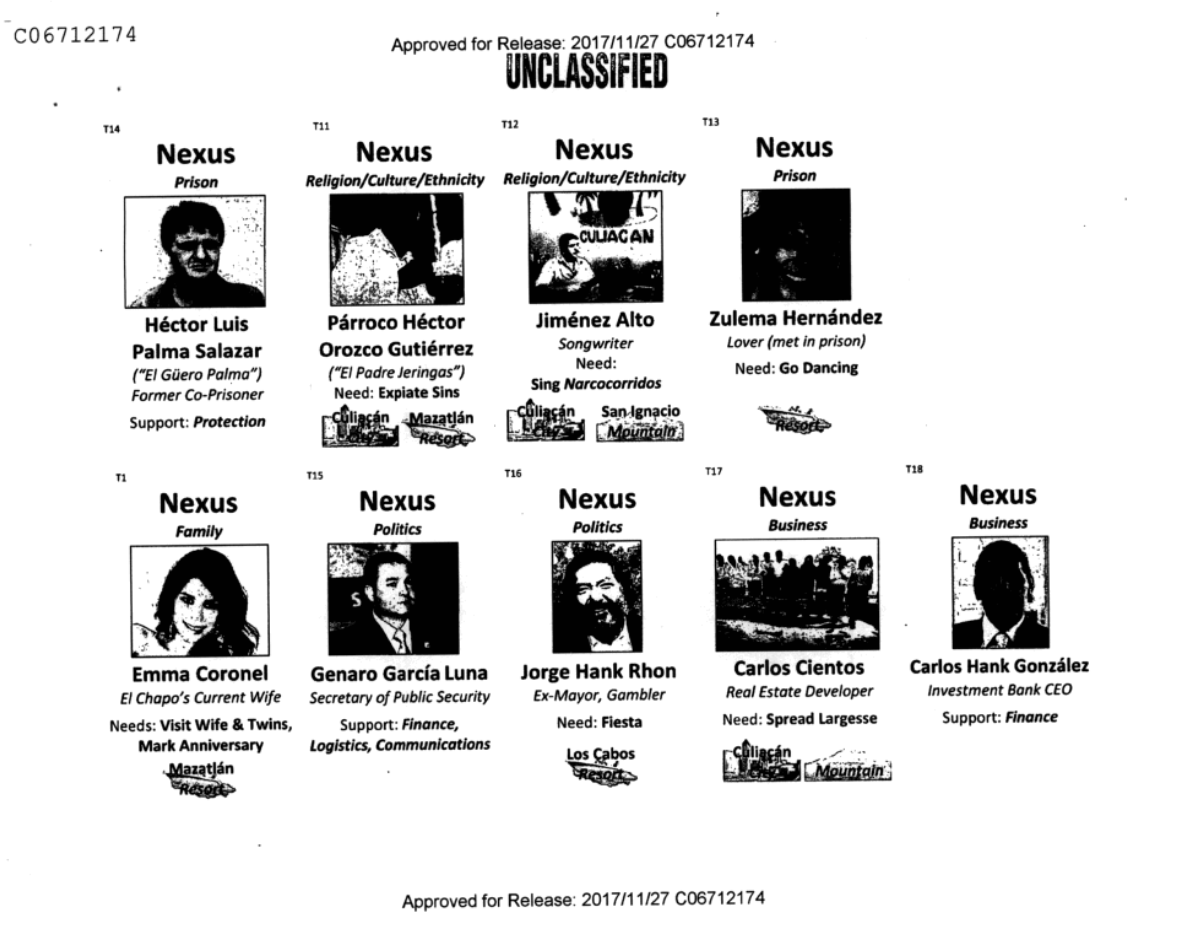

The Central Intelligence Agency (CIA) outlined the concept for a role-playing board game titled Kingpin about the hunt for notorious Cártel de Sinaloa brand ambassador Joaquin "El Chapo" Guzmán Loera in handwritten notes dated from approximately August through October 2015. The game consisted of opposing Hunter and Cartel teams with the former coordinating intelligence collection and enforcement actions in their pursuit while the latter attempted to elude detection and capture. The game was created as a training exercise to illustrate the principles of intelligence collection and operational planning against an adversary in a foreign nation within the constraints of the environment.
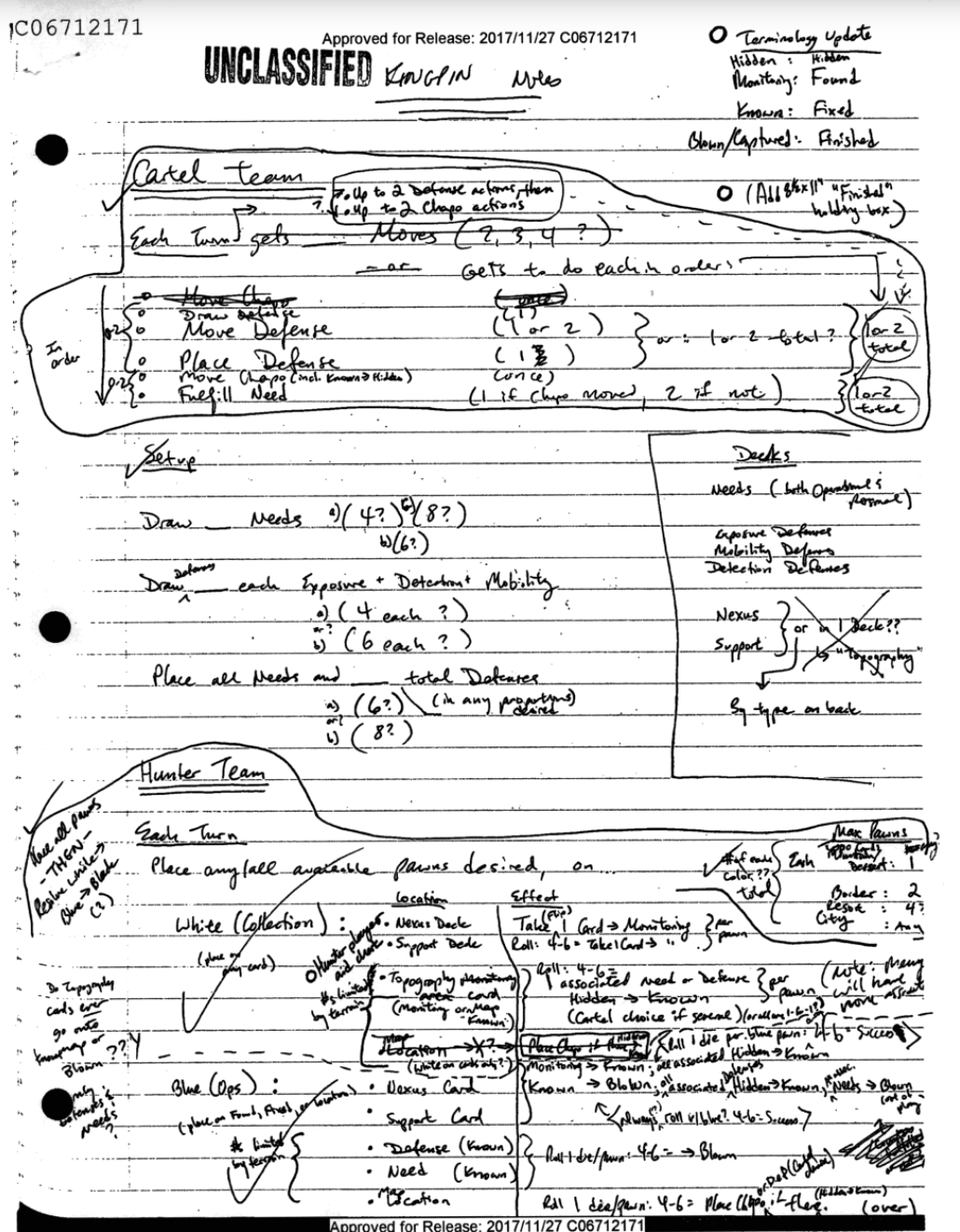
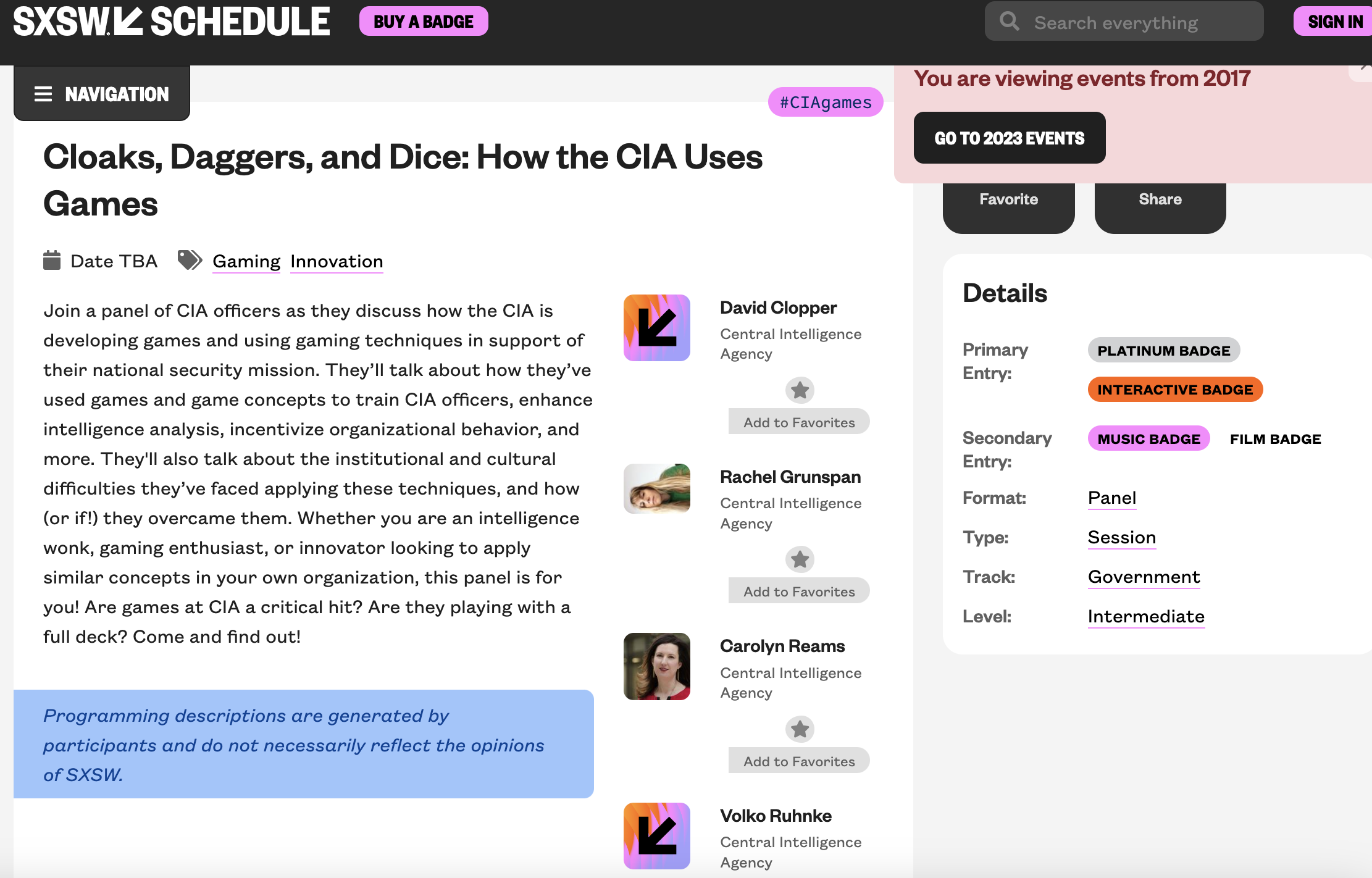
The game was debuted to the public by the Agency at their panel discussion and recruiting drive at the SXSW festival in Austin, Texas in March 2017.
Following reports about the CIA's panel at SXSW by Sam Machkovetch published in Ars Technica, investigative journalist Douglas A. Palmer with MuckRack submitted a Freedom of Information Act (FOIA) inquiry for information about the Kingpin game in June 2017.
The documents responsive to the inquiry were approved for released by the CIA on 27 November 2017 and the documents were released to Palmer and MuckRack on 18 March 2018.
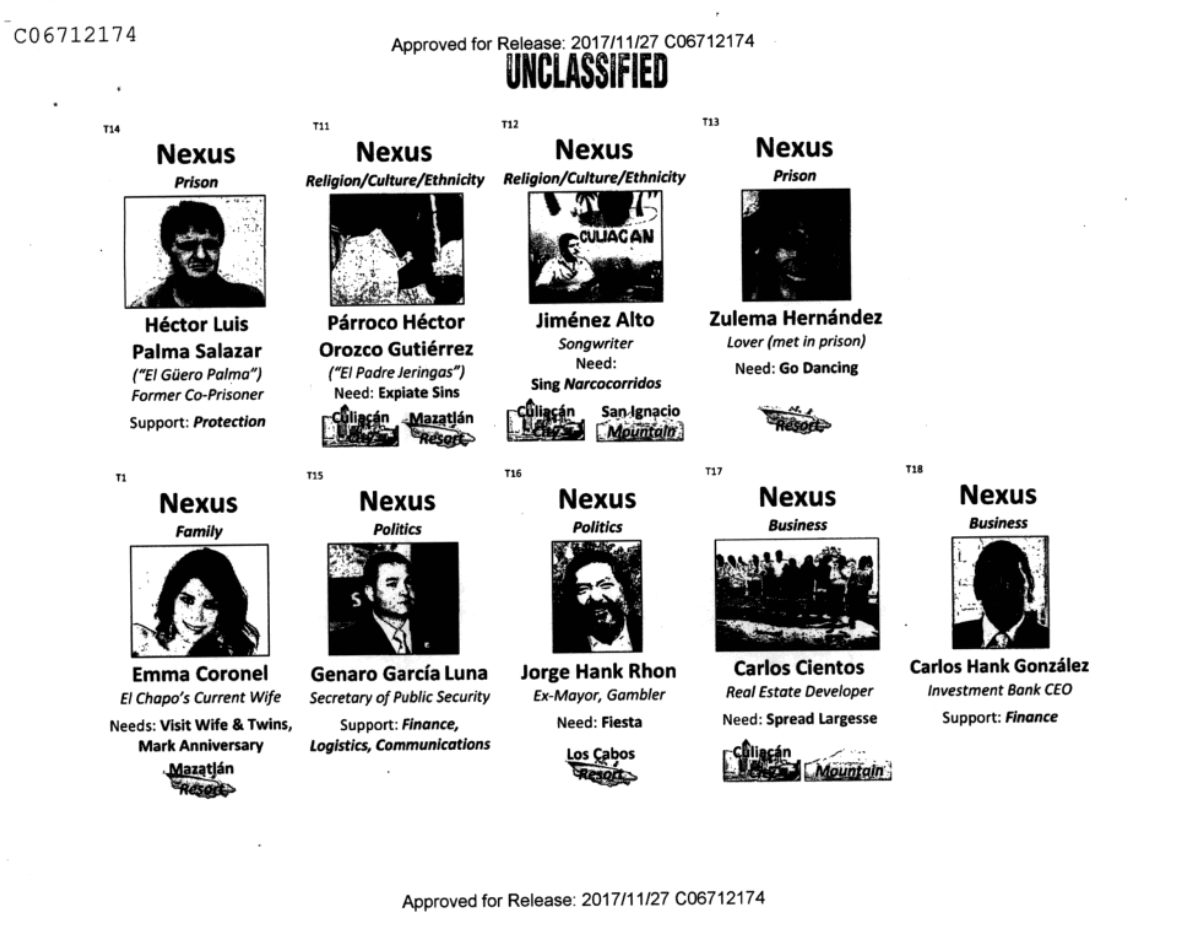
Among the documents published by MuckRack, a set of "Nexus to Support" cards used in the game featured a list of El Chapo's personal acquaintances and the support each provided, with one name in particular standing out: Genaro García Luna.
García Luna was formerly Mexico's equivalent of the Director of the Federal Bureau of Investigation and the architect of the so-called "War on Drug Traffickers". In Kingpin, García Luna was featured as a nexus of political support for El Chapo, helping the cartel leader with finances, logistics and communications.
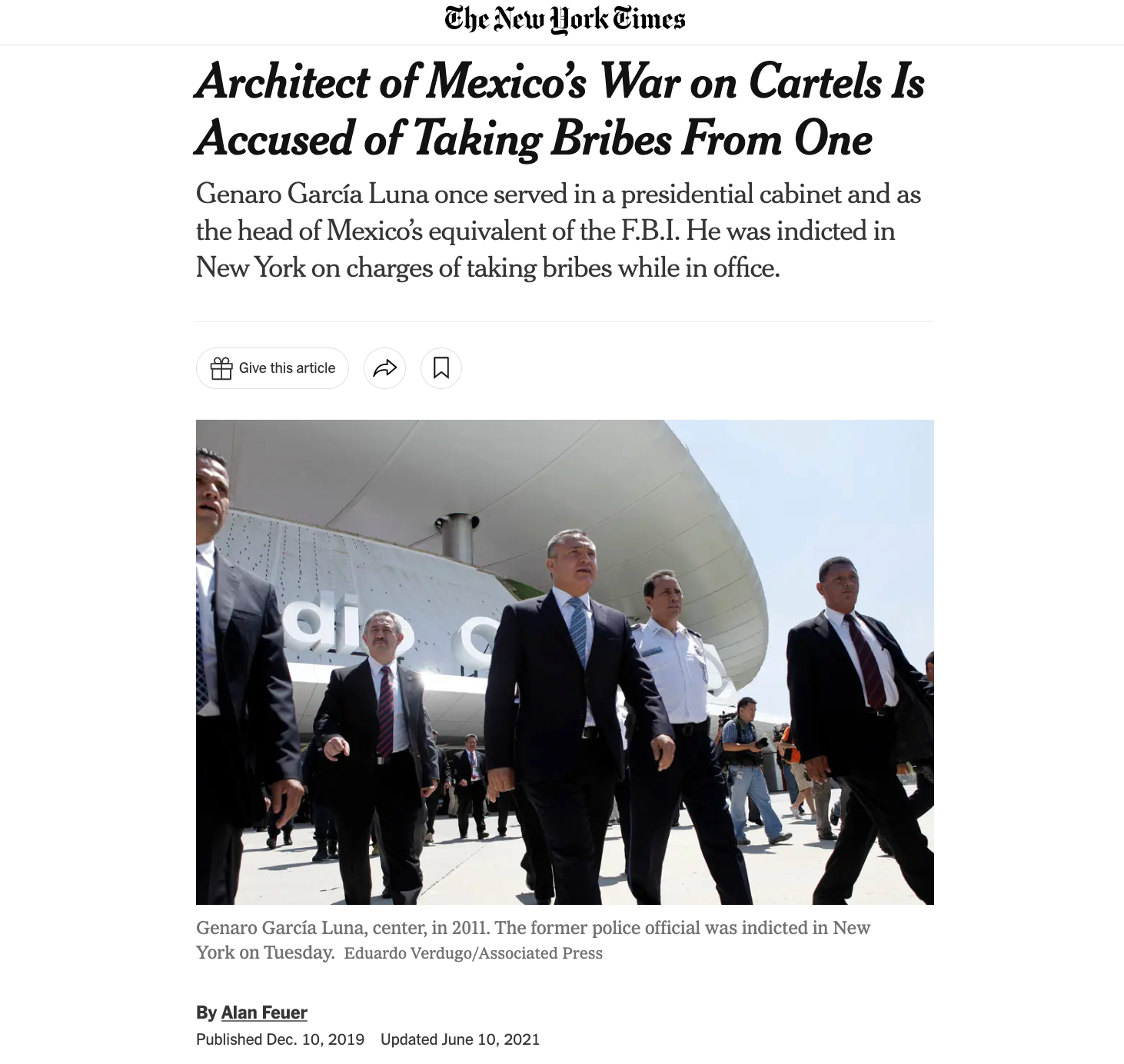
Genaro García Luna was arrested in Dallas after deboarding a flight from Mexico on 9 December 2019 and charged with a cocaine trafficking conspiracy spanning from January 2001 until the time of his arrest almost two decades later.
While the news of his arrest reverberated in both the U.S. and Mexico, the news wasn't exactly unexpected since allegations of collusion with major drug traffickers have followed García Luna throughout his career. His relationship with the Sinaloa cartel was so well established that the CIA apparently thought nothing of including him in El Chapo's support network in their training game.
At the end of his tenure as Mexico's Secretary of Public Security in December 2012, García Luna left the public sector to form his own company, a security consulting firm called GLAC Consulting. With offices in Mexico City and Miami, GLAC's executive board comprised a who's who of former American, Colombian and Spanish law enforcement and intelligence officials, including Jose A. Rodriguez Jr., the former Director of CIA's Clandestine Services famous for destroying the Agency's videotaped torture sessions.
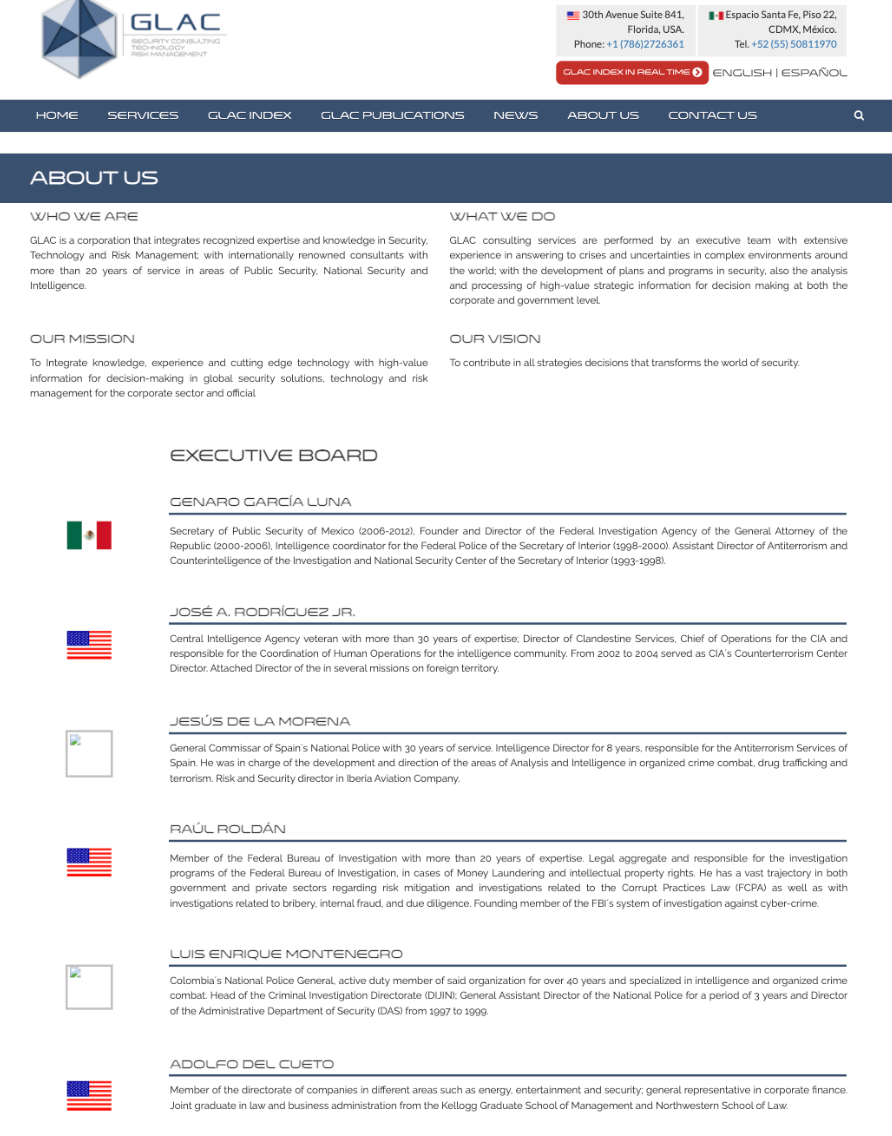
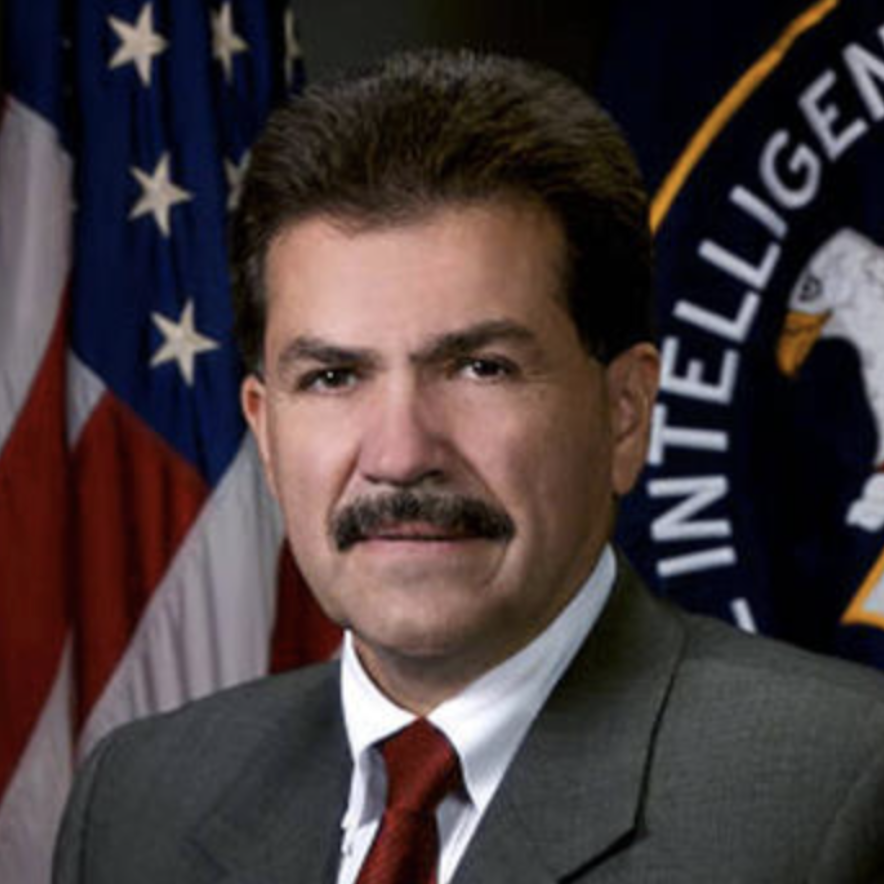
Ironically, while the CIA was recruiting creative young people at SXSW in 2017 with a board game about hunting the world's most notorious drug lord, the CIA's own former Director of Operations was working on the board of a company owned by a man identified by the Agency as a "nexus of support" for El Chapo.